
Critical Nutritional Foundations: Hydration!

CRITICAL NUTRITIONAL FOUNDATIONS V
Hydration!
by Ani Bajaj (NTP, RHP-1, FBCS)
Hydration is foundational—every metabolic reaction, nutrient transport pathway, and detoxification process depends on it!
Did you know?
- Water is the most important nutrient in the body- it makes up to 55-60% of our total body mass.
- In an average adult, that equates to 10-13 gallons of water.
- Most of the volume of cells and body fluids is water.
- You can survive about 8 weeks without food, but only days without water.
Role of Water in the Body:
- Improves oxygen delivery to the cells
- Absorb shocks to joints and organs
- Lubricates joints
- Transports nutrients
- Regulates body temperature (in forms of sweating)
- Improves cell-to-cell communications
- Enables cellular hydration
- Removes waste
- Maintains normal electrical properties of cells
- Flushes toxins
- Cushions bones and joints
- Prevents tissues from sticking (dehydration makes you less flexible)
- Enables the digestion process
Let’s look at a few of these.
An important role is removal of waste! Water plays a critical role in waste removal—from the cellular level all the way out of the body. It helps move metabolic waste out of cells, into the bloodstream, through the kidneys, and ultimately out via urine and stool.
Water is the main transport medium of the body. Nutrients (vitamins, minerals, glucose, amino acids) dissolve in fluid and travel through blood and lymph. Water allows nutrients to move from the digestive tract into the bloodstream and circulate to tissues and enter cells. Without adequate hydration, this transport system becomes less efficient; nutrients may be present, but delivery is compromised.
Water enables cellular hydration - Every cell relies on water to maintain cell volume and structure, electrolyte balance (sodium, potassium, etc.), membrane function (nutrients in, waste out). Hydrated cells can produce energy more efficiently, communicate properly, repair and regenerate.
Water supports lubricating of joints - Water helps keep joints moving smoothly by supporting synovial fluid—the body’s natural lubricant—and by maintaining the water content of cartilage. Hydration, together with regular movement, helps joints stay cushioned and resilient.
HUMAN URINARY SYSTEM
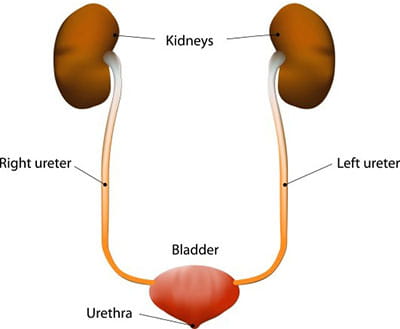
The Urinary System Handles Hydration
It consists of 4 primary structures: 1) Two Kidneys 2) Two Ureters 3) Urinary bladder 4) Urethra.
Functions include: Producing, storing and eliminating urine, filtering the blood to eliminate waste, maintaining body’s mineral /electrolyte balance and helping regulate red blood cell production.
The kidneys do most of the work within the urinary system. They are filtration organs! They filter the blood to remove cellular wastes, such as some water and bile pigments. Most of the water and many of the solutes are returned to the bloodstream and the rest is excreted as urine.
Water and Electrolytes!
Electrolytes are minerals that carry an electrical charge when dissolved in water, allowing fluids to move into and out of cells and helping maintain fluid balance.
Key electrolytes include:
- Sodium → regulates fluid balance outside cells
- Potassium → regulates fluid balance inside cells
- Magnesium → supports muscle, nerve, and cellular function
- Phosphate → supports energy production and cellular processes
- (Also important: chloride, which works closely with sodium)
Electrolytes and water must be in balance!
Electrolytes have four general functions:
- Control the osmosis of water between fluid compartments. (Osmosis is the movement of water across a membrane from an area of lower solute concentration to higher solute concentration)
- Carry electrical current - Because electrolytes are charged, they enable nerve signaling and muscle contraction.
- Help to maintain pH balance - Electrolytes help keep the body’s acid–base balance within a tight range, which is critical for enzyme function and metabolic processes.
- Serve as cofactors needed for optimal enzyme activity- Many electrolytes are required for enzymes to function properly, supporting energy production, digestion and cellular repair.
Make sure you get adequate electrolytes in water, especially if you are drinking water that was filtered using reverse osmosis. Here are some examples:
- Trace mineral drops
- Electrolyte solutions
- Coconut Water
- Unrefined sea salt crystals in water.
- Switchel (Colonial era drink – also called ‘Haymaker’s Punch’ - made with ginger, lemon, apple cider vinegar, water and honey )
Many Americans live in a state of chronic dehydration!
Potential Signs of Dehydration:
- Early Signs: Thirst / Fatigue/ Dry Mouth / Dark Urine / Cravings / Muscle cramps / Anxiety / Headaches / Migraines
- Chronic Signs: Heartburn / Joint pain / Back pain / Constipation / Colitis (Inflammation of the colon)/ Exercise asthma
Without water, even the best nutrition plan can’t do its job!

Drinking water tips!
- Drink from a good source of daily drinking water – a good filtration system is ideal for both drinking water and showering.
- Drink a glass upon waking, and 30 minutes before each meal.
- Drink water when you have a sensation of thirst.
- Drink water throughout the day until urine becomes light yellow.
- Drink water at the first sign of being tired, tense, anxious, feeling a headache or having difficulty concentrating.
- Try not to drink water during meals to avoid diluting digestive enzymes and stomach acid - especially carbonated water.
- Drink water before and after vigorous exercise, but not too much during workout
- Avoid many trips to the bathroom by:
- Making sure your water is electrolyte (mineral) rich
- Sip water slowly throughout the day vs. drinking large quantities at once.
- Add lemon, lime, cucumber or berries to water to create a hydrating infusion, if drinking plain water is not appetizing.
*Bio-individual needs may vary.
How much to drink?
Adequate intake of total averages (including drinking water)
- Females ages 9-70+: *Approx. 54-70oz a day
- Males ages 9-70+: *Approx. 61-100oz a day
- Children ages 1-8: *30-41oz a day
- Pregnancy /Lactating: *77oz a day
*NTA (Nutritional Therapy Association Guidelines).
*Bio-individual needs may vary.
Helpful Resource!
Environmental Working Group (EWG) water quality checker: This site also offers filtration suggestions based on what is found in your local water.
Supplement Recommendations:
Solutions for Health Advanced Electrolytes -Advanced Electrolytes is a complete and balanced electrolyte formula to help promote optimal hydration and health. It contains potassium, sodium, chloride and magnesium, the main electrolytes found in the body.
Pure Encapsulations Electrolyte Energy Formula - Supports hydration, stamina, and electrolyte repletion.
_____________________________________________________________________________
05/13/2026
Ani Bajaj / Solutions 4 Health LLC information or services are not designed or intended to treat any specific disease or medical condition. No comment or recommendation should be construed as being a medical diagnosis or substitute for a medical professional.